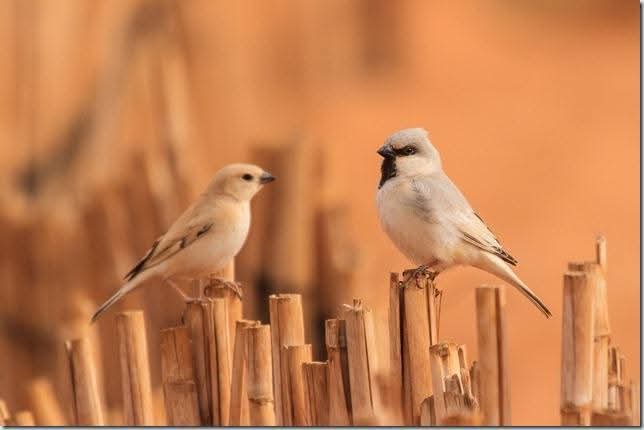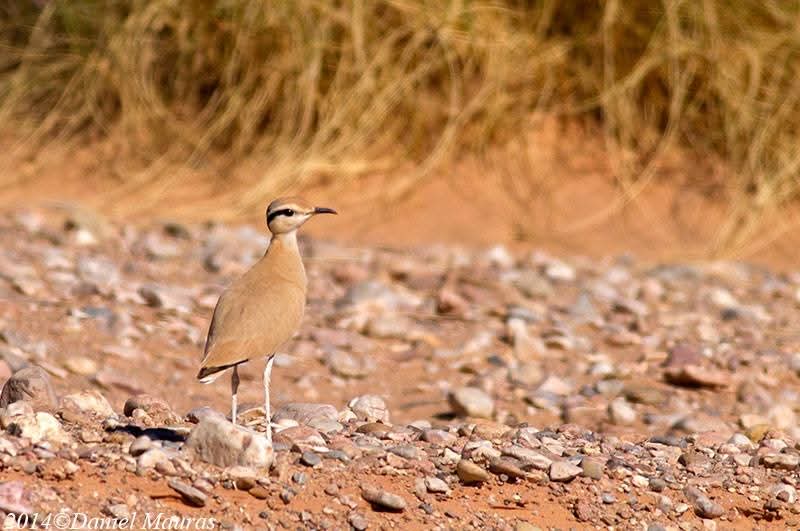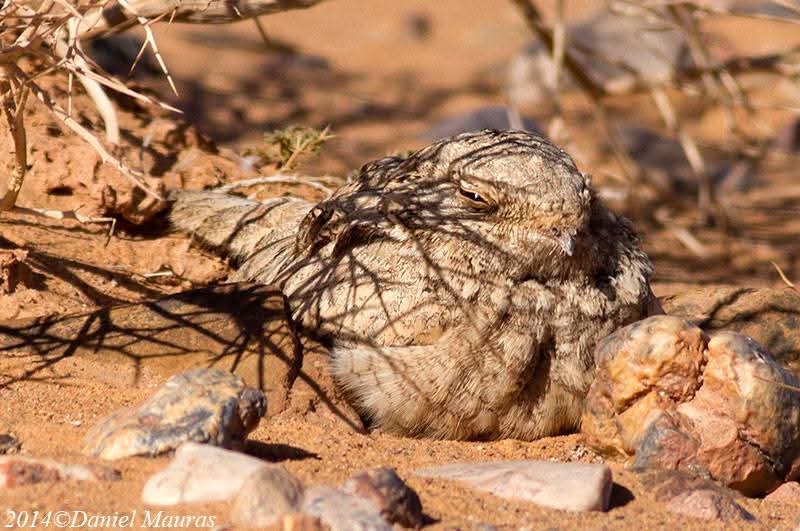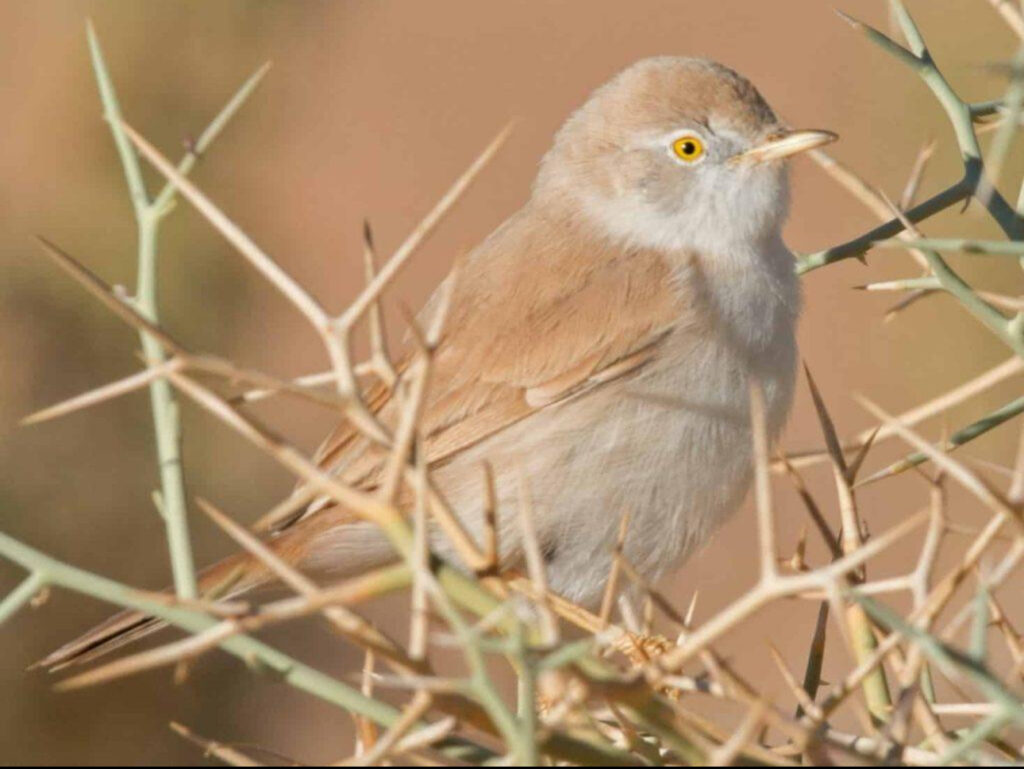
The Desert Warbler is a small and secretive bird of the Sahara, perfectly adapted to dry and harsh environments. With its pale sandy coloring and quiet behavior, it blends easily into desert vegetation, making it difficult to spot. Despite its discreet presence, it is a true specialist of arid landscapes.
Physical Description
The Desert Warbler is a small, slender songbird with soft sandy-grey plumage that provides excellent camouflage. It has a delicate build, a thin pointed bill, and subtle markings around the eyes.
Its tail is relatively long and often flicked while moving through shrubs. Overall, its appearance is simple but perfectly adapted for hiding among dry vegetation and tamarisk bushes.
Subspecies
No subspecies are widely recognized for the Desert Warbler. It is generally treated as a single species across its range, with only minor regional variation.
Distribution and Habitat
The Desert Warbler is found across North Africa, especially in the Sahara and Sahel regions. Its range includes Morocco, Algeria, Tunisia, Libya, Egypt, and parts of Mauritania.
It prefers dry habitats with scattered shrubs, tamarisk stands, and semi-desert plains. Unlike some desert birds, it avoids completely open dunes and stays close to vegetation that provides cover and nesting areas.
Behavior and Ecology
This species is shy and highly active within low vegetation. It moves quickly through bushes, hopping and darting between branches while searching for food.
Its diet mainly consists of insects and small invertebrates. The Desert Warbler is usually solitary or seen in pairs and relies heavily on camouflage and quiet movement to avoid predators.
Vocalization
Its song is soft and slightly musical, made up of short chirps and delicate warbling notes. While not loud, it becomes more noticeable during the breeding season when males sing from within shrubs to defend their territory.
Conclusion
The Desert Warbler is a quiet and hidden specialist of the Sahara. Its subtle colors, fast movements, and gentle song make it an important part of desert ecosystems, representing the rich biodiversity that exists even in the harshest environments.
Want to See the Desert Warbler in Merzouga?
Contact Sahara Birding Merzouga and join a guided birdwatching tour with Lahcen, a local guide who knows the best spots to observe desert birds.
Contact Us