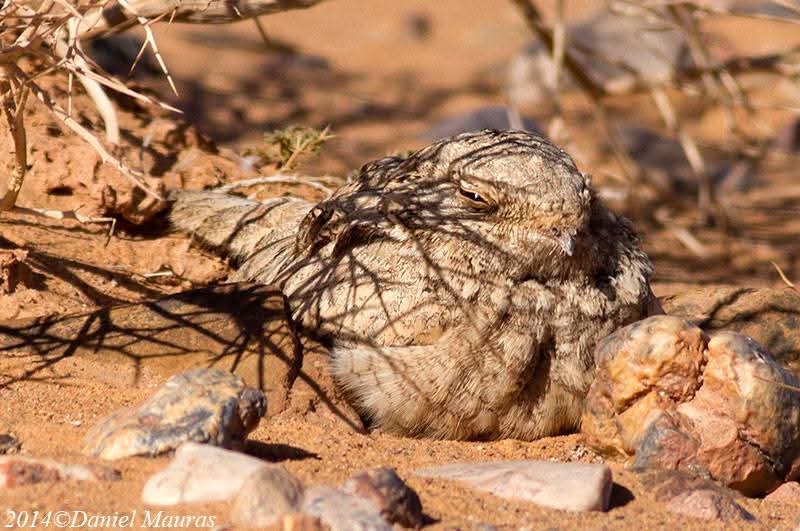
The Egyptian Nightjar is a mysterious desert bird known for its nocturnal lifestyle and silent presence. It is mostly active after sunset, when it hunts insects in the calm desert air. During the day, it rests on the ground, perfectly camouflaged with its surroundings, making it very difficult to spot.
Why It Is Called “Nightjar”
The name “Nightjar” comes from two key characteristics of the bird. “Night” refers to its activity after sunset, while “jar” is believed to describe its unusual and repetitive calls, which can sound harsh or “jarring” in the quiet desert environment.
Physical Description
The Egyptian Nightjar has mottled brown and sandy plumage that provides exceptional camouflage. Its body is low to the ground, and its wide mouth helps it catch insects in flight at night.
Its wings are long and allow for silent flight, making it an efficient nocturnal hunter. During the day, it remains motionless, relying on its camouflage for protection.
Behavior and Ecology
This bird is almost entirely nocturnal. It hunts insects during the night, using its wide mouth and sharp reflexes to catch prey while flying.
Unlike many birds, it does not build a traditional nest. Instead, it lays its eggs directly on the ground, relying on camouflage to protect them from predators.
Its presence is closely linked to quiet, undisturbed desert environments.
Vocalization
The call of the Egyptian Nightjar is a soft, repetitive “churr” sound that can travel across the desert at night. Males are more vocal, especially during the breeding season, when they use their calls to attract mates and mark territory.
They may also produce wing-clapping sounds during display flights, adding to their mysterious nighttime presence.
Distribution and Habitat
The Egyptian Nightjar is found across North Africa and parts of the Middle East. It prefers open desert areas, sandy plains, and semi-arid regions where human disturbance is minimal.
It depends on natural desert habitats with low light pollution and healthy insect populations.
Conservation and Threats
In recent years, the Egyptian Nightjar has become less commonly seen in some areas. This is mainly due to habitat disturbance, increased tourism, and expansion of infrastructure in desert regions.
Light pollution also affects its ability to hunt and communicate, while declining insect populations reduce its food sources.
Lifespan
The Egyptian Nightjar typically lives between 4 to 7 years in the wild, depending on environmental conditions, food availability, and exposure to predators.
Similar Species
- European Nightjar (Caprimulgus europaeus)
- Red-necked Nightjar (Caprimulgus ruficollis)
- Nubian Nightjar (Caprimulgus nubicus)
- Sand-colored Nightjar (Caprimulgus arenicolor)
Conclusion
The Egyptian Nightjar is one of the most fascinating birds of the Sahara, representing the mystery of desert life after dark. Its silent flight, soft calls, and perfect camouflage make it a unique species to observe during birdwatching tours in Merzouga.
Want to Experience Desert Birdlife at Night?
Contact Sahara Birding Merzouga and join a guided tour to discover unique nocturnal birds with a local expert.
Contact Us